Group Therapy in
Kitchener-Waterloo
Healing in the Company of Others.
You don't have to carry this alone. There is something that happens when you sit in a room with people who truly get it. Not because they have read about your experience, but because they have lived something similar.
The weight you have been holding starts to shift. Not because anyone fixes it for you, but because you are finally seen.
Most of us have learned to suffer alone. We put on a good face. We manage. We convince ourselves that our struggles are not significant enough to burden others with, or that no one would understand anyway.
When you hear someone put words to the exact feeling you have never been able to articulate, shame loosens its grip. You stop feeling like the only one. And in that recognition, something begins to heal.
Group therapy is one of the most powerful and underutilized forms of healing available. If you have been curious but hesitant, you are not alone in that either.
Why we heal in community
Most of us have learned to suffer alone. We put on a good face. We manage. We convince ourselves that our struggles are not significant enough to burden others with, or that no one would understand anyway.
But here is what gets lost in that isolation: the very thing that often created our wounds was relational. Disconnection, rejection, or being unseen. It makes sense, then, that healing often needs to happen in relationship too.
The Power of Witnessing
Group therapy creates a space for "witnessing." You speak your truth, and others receive it without trying to fix or minimize it. When you hear someone put words to the exact feeling you have never been able to articulate, shame loosens its grip. You stop feeling like the only one.

Is Group Therapy Right for Me?
If you are reading this, there is probably a part of you that feels drawn to group work, and another part that feels resistant. Both make sense.
"I'm too private for this."
Many people who thrive in groups describe themselves as private. Group therapy does not require you to share everything. You get to decide what feels safe to bring. Some people spend several sessions mostly listening, and that is completely valid.
"My problems aren't serious enough."
This is one of the most common things people say. Therapy groups are not reserved for people in crisis. They are for anyone who wants to heal in connection with others. Your pain does not need to meet a threshold to be worthy of support.
"What if I get triggered?"
A well-facilitated group has clear guidelines around this. Part of the facilitator's job is to create a safe container where difficult emotions can arise without overwhelming the room. You are invited to witness, not absorb.
"I don't want to take up space."
If this thought feels familiar, group might be exactly what you need. Learning to take up space, to let yourself be seen, to trust that your presence matters. These are relational skills that groups help you practice.
Current and Upcoming Groups
Grief Untethered
Loss does not follow a timeline. Whether you are grieving a death, a relationship, a version of yourself, or something harder to name, this 8-week facilitated group offers space to tend to what has been lost without pressure to 'move on'. It is not about fixing grief, but being with it, together.
Anxiety & Nervous System Workshops
For those who live with chronic anxiety, worry, or a nervous system that never quite settles. This 6-week series combines psychoeducation with experiential practice. You will learn how anxiety works in the body and practice regulation tools in a community of people who 'get it'.
Finding Freedom
Recovery from disordered eating is not a straight line. This 8-week group offers a non-diet, trauma-informed space to explore your relationship with food, body image, and the emotions underneath. No weigh-ins. No meal plans. Just compassionate support from others who understand. More details coming soon.
The specific benefits of group work
You realize you are not alone
It is a laboratory for relationships
It offers a different kind of insight
It can be more affordable
What a session looks like
If you have never been to group therapy before, not knowing what to expect can be the biggest barrier. Here is a general sense of how sessions unfold.
Arrival and settling
Sessions typically begin with a few minutes to land in the space. This might include a brief grounding exercise or a moment of quiet to transition from your day.
Check-in
Each person has a chance to share how they are arriving. This is usually brief—a sentence or two. It helps the group get a sense of where everyone is emotionally.
The heart of the session
Depending on the group, this might involve a theme, a guided reflection, open sharing, or experiential exercises. In a grief group, you might be invited to speak about your loss or simply listen.
Confidentiality and safety
What is shared in the room stays in the room. This is established clearly at the start and reinforced throughout. The facilitator also monitors the emotional temperature of the group.
Closing
Sessions end with a moment to transition back out. This might be a brief reflection, a word or phrase to carry with you, or simply a pause before re-entering your day.
"You will never be forced to share more than you are ready to. You can pass. You can listen. You are welcome exactly as you are."
Leanne's Approach to Group Facilitation
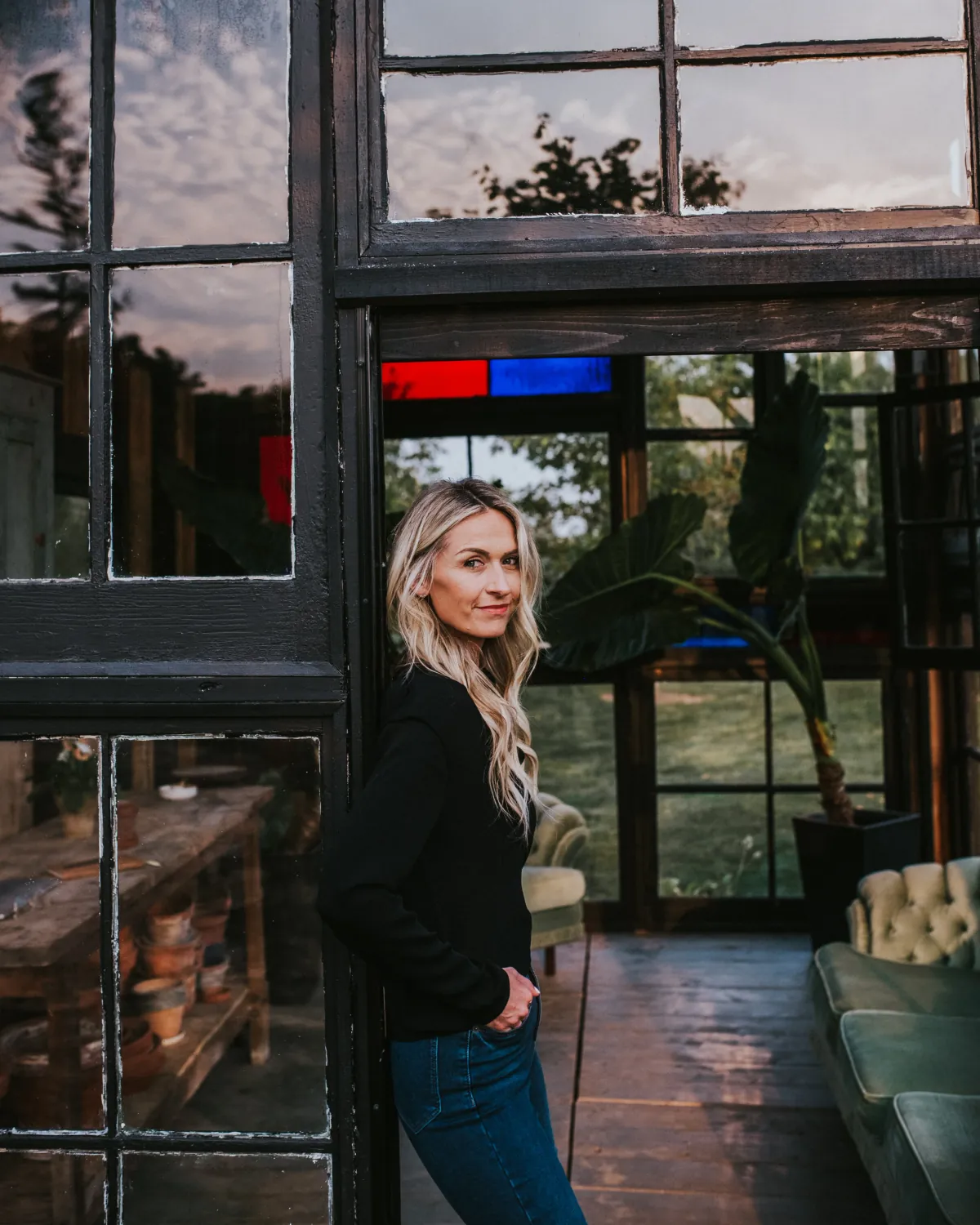
Leanne Sawchuk is a Registered Psychotherapist in Kitchener-Waterloo with specialized training in grief, trauma, and relational therapy. She brings the same warmth and clinical depth to her group work that she offers in individual sessions.
Her approach to facilitation is grounded in creating what is sometimes called a "safe container." This means establishing clear boundaries, cultivating trust, and holding space for whatever arises without rushing to resolve it.
Leanne's groups are trauma-informed, which means she pays close attention to pacing, consent, and nervous system responses. She is trained to notice when someone is becoming overwhelmed and to offer support without making it a spectacle.
She also brings a deep respect for the wisdom of the group itself. Facilitated healing circles are not about the therapist being the expert in the room. They are about creating conditions where people can be present with one another in a meaningful way.
Practical details
Location
Some groups meet in person in Kitchener-Waterloo, while others are offered virtually for accessibility across Ontario. Online therapy groups allow people from Cambridge, Guelph, Toronto, and beyond to participate from the comfort of their own space.
Commitment
Most groups run for a set number of weeks (typically 6 to 10). Commitment to attending each session is encouraged because continuity builds trust and depth.
Cost & Insurance
Group sessions are priced lower than individual therapy and may be covered by extended health benefits. Visit the fees page for specific information.
How to join
All groups begin with a brief consultation to ensure the group is a good fit. You can book a consultation here.
Frequently Asked Questions
Yes. Confidentiality is a cornerstone of group therapy. All participants agree to keep what is shared in the room private. The facilitator reinforces this at every session.
You are never required to speak. Many people spend their first session or two mostly listening. Participation looks different for everyone.
Tears are welcome. They are not something to apologize for or rush through. Part of the group's purpose is to create a space where emotions can be felt without judgment.
This is rare, but it happens. If you recognize someone, you can speak with the facilitator privately. The group agreement around confidentiality applies to everyone.
For some people, yes. For others, group works best as a complement to one-on-one sessions. This can be discussed during your consultation.
Occasionally, yes. Workshops are a great way to dip your toe in without committing to a full group cycle. Join the waitlist to be notified about upcoming offerings.
You deserve to be seen
If you have been doing this alone for a long time, the idea of being witnessed by others might feel uncomfortable. That discomfort is not a sign that group therapy is wrong for you. It might be a sign that it is exactly what you need.
You do not have to be ready. You do not have to have the right words. You just have to be willing to show up.
You are not alone in this.
Have questions about an upcoming group? Send a message.